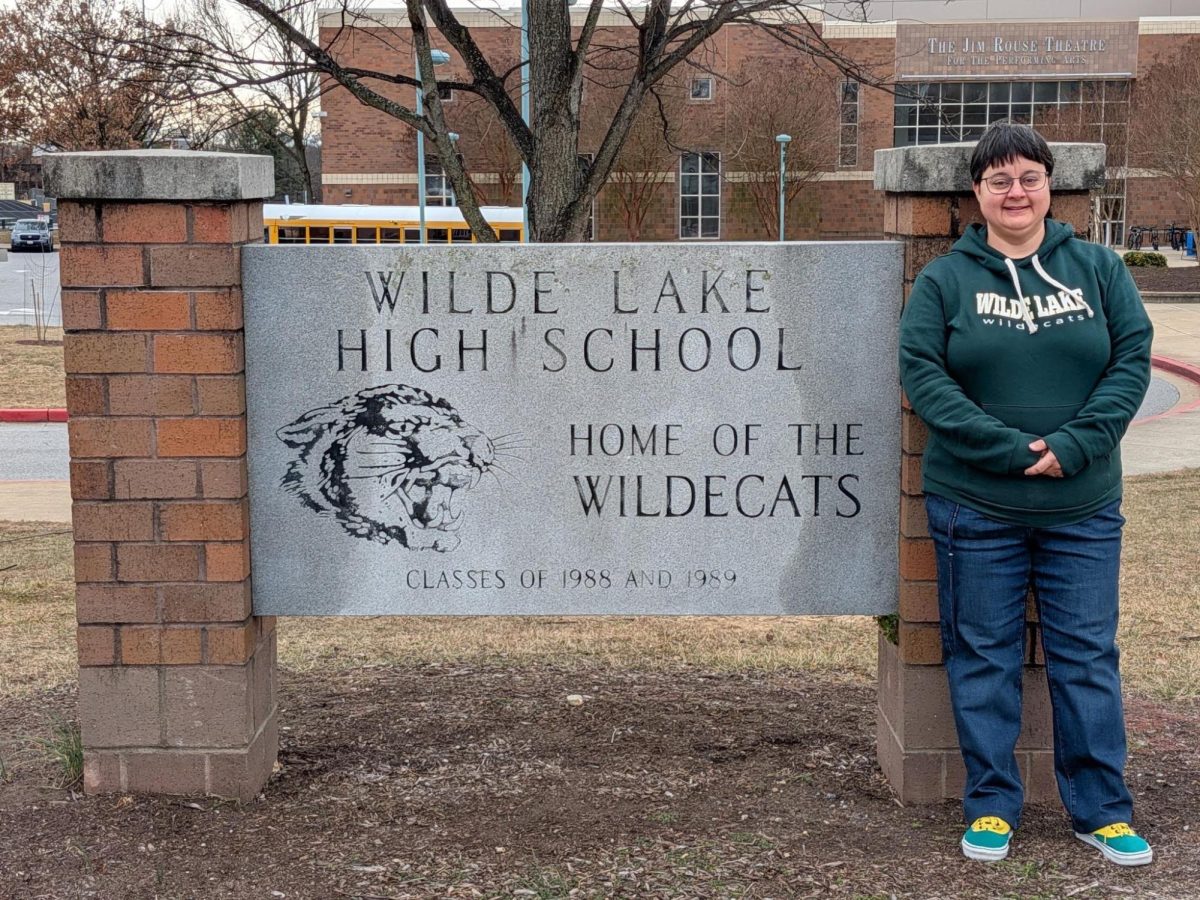




Every day, I carry my cultural identity with pride. Every viral K-pop song and every hit K-drama feels like a win for the local Korean community. However, despite the growing presence of Asian culture in our community, we continue to overlook the struggles Asian Americans face in the United States, and those struggles are experienced by Asian students here at Wilde Lake.
Deeply rooted in American culture, racism has persisted year after year as one of the greatest weaknesses of our country, and so far, this year has been no exception.
In 2026, Asian Americans are among those being targeted by the U.S. Immigration and Customs Enforcement (ICE) under the Trump Administration. Chongly Scott Thao, a Hmong-American 56-year-old man was wrongfully arrested in St. Paul, Minnesota this January.
According to CBS News, warrantless ICE agents broke down Thao’s door and tore him from his home at gunpoint. Thao was wearing nothing but a pair of boxers, his Crocs, and a hastily retrieved blanket in the sub-zero cold.
Thao was arrested over a mistaken identity in a “targeted operation of two convicted sex offenders.” The incident not only displayed the needlessly aggressive nature of growingly dangerous ICE agents but also served as a reminder of Asian Americans’ persisting lack of security in our communities.
Asian Americans are a minority in our student population. The fundamental themes of racism that took root in the ICE incident in St. Paul are present in my own experiences at Wilde Lake.
I was inspired to write this article after an experience I had at school during lunch earlier this year. I dropped my milk, and after I turned around to pick it up and turned back around to my table, I could hear the students sitting behind me start to (attempt to) sing the Gangnam Style. It was embarrassing. All they needed was a split-second glance at my face to reduce my identity to a joke.
My initial reaction was to brush it off. I thought to myself, why should I let the ignorance of a stranger affect my emotions? Eventually, things started to sink in. I can’t ignore the fact that what happened to me at lunch was wrong. I shouldn’t have to get used to micro-aggressions because they shouldn’t happen in the first place. It wasn’t the end of the world, but it quietly upheld the harmful prejudices that continue to plague our country; another bag of garbage tossed to the vast wasteland of racism.
What happened at lunch reminded me of the challenges I’ve faced in the past. Since elementary school, I’ve had my fair share of name-calling and teasing just for the way I look, but the times I feel the weakest are when I have to watch the people around me endure the same struggle.
When I was in eighth grade, I came home one day to find my brother crying in my mother’s arms. The kids in his class wouldn’t stop speaking to him in an exaggerated “Chinese” accent, even when he asked them to stop. He held in his tears until he got off the bus at the end of the day. My brother showcased a strength that no nine-year-old should have to exhibit, and it made me sad to watch someone so young encounter such a real issue.
My experience isn’t unique. Every Asian student at Wilde Lake can relate to the name-calling and stereotyping. Another Asian student at Wilde Lake said, “People just usually ignore any racism toward Asian people … I feel like no one’s defending us or doing anything because they don’t think it’s that serious.” The continued targeting of Asian people as the butt of internet humor has desensitized our generation to racism, and students take jokes from their screens to our school where they directly harm other students.
One disadvantage of being in the school minority is a lack of representation. This year, there was no AAPI heritage assembly. There was no bulletin board in the social studies hallway or outside the media center, and no morning announcements highlighting historical figures in AAPI. I heard more about Cinco de Mayo than AAPI. I heard more about Star Wars Day than AAPI. The lack of Asian representation in our school is an issue of its own, but it only contributes to the tolerance and acceptance of racial prejudice.
I hope that my experiences shine a light on the challenges Asian students face at Wilde Lake, because they aren’t talked about. As we continue to work toward strengthening our school community, it is essential that we create a safe space for everyone, and the first step to opening that space is to ensure that every voice is heard.