


Coming across political opinions online is almost unavoidable, which is to be expected. Not every time, but often enough that it’s noticeable, opening comment sections to those posts feels like stepping into a conversation that’s extremely tense and heated. A few scrolls in, on apps like TikTok and Instagram, politics are often presented in quick clips and bold captions which spark emotional arguments.
What stands out to me is how quickly complicated issues get reduced to something simple and confrontational. As teenagers and young adults, we are heavily consuming media on a daily basis, constantly surrounded by information about wars, elections, social issues, and debates that affect real people‘s lives. But on social media and other online platforms, those conversations are often condensed into short explanations or strong statements that leave little room for holistic discussion and a multitude of perspectives. Instead, politics is often treated less like a conversation and more like a competition between two sides.
And while social media has the power to expose us to new perspectives and voices, some of which we may never hear otherwise, which is important, it also tends to simplify complex topics into “good versus bad,” or even “us versus them.”
Because of this, many teenagers, myself included, feel pressured to agree quickly, instead of learning and educating themselves on a deeper level.
Additionally, what we see online isn’t random. Social media algorithms are designed to show us more of what we interact with. If you like, share, or watch content from one perspective, your feed will slowly fill with more of the same. Over time, it can start to feel like everyone agrees with one viewpoint, even when that’s not true. This makes it easier to assume that what we are seeing must be “right,” simply because that’s all we are being shown.
I’ve noticed that a lot of young people adopt opinions that are popular online, not because they don’t care to educate themselves on their own, but they repeat those opinions because they care and don’t feel confident enough to speak on their own.
So instead of researching, asking questions, or sitting with uncertainty some people adopt whatever view seems most accepted online. However, being informed should not be confused with being loud. And thinking should not be replaced by reposting.
There is a difference between seeing a lot of political content and actually understanding the issues behind it. With so many opinions circulating, it can be hard to slow down and figure out what anyone truly believes, including yourself.
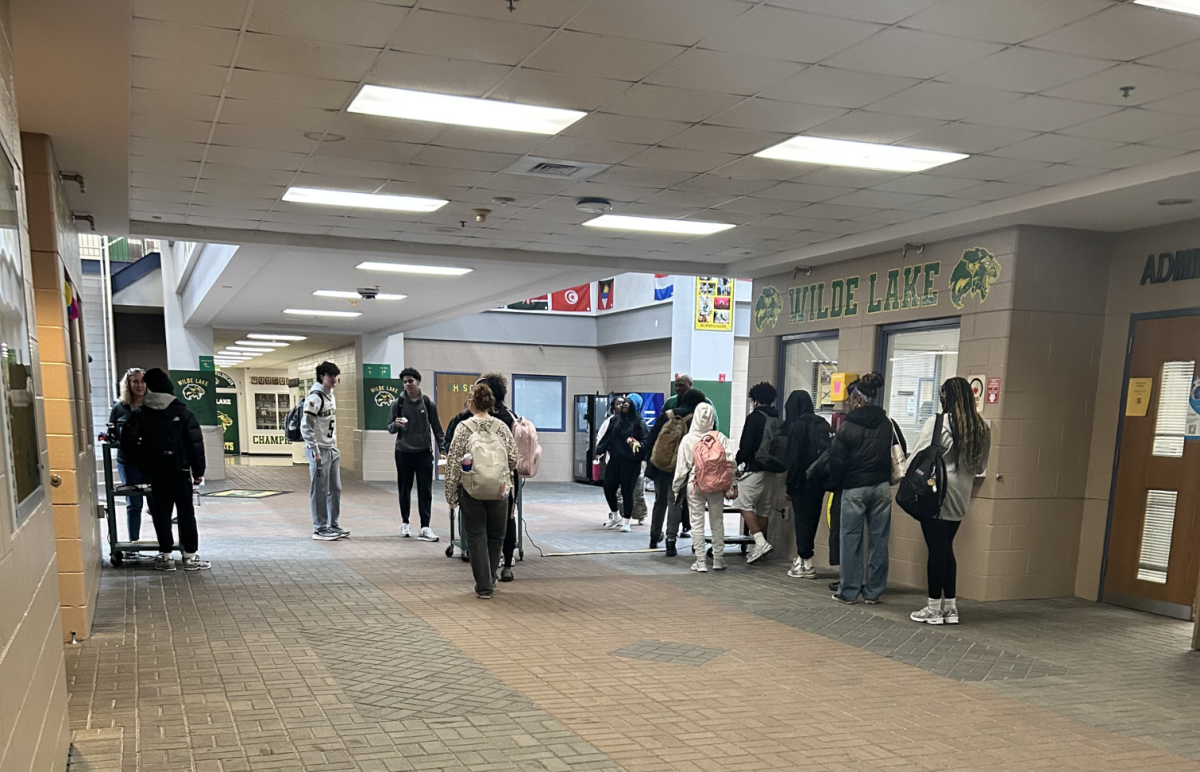
In classrooms, group chats, or casual conversations, the tone can shift quickly when political topics come up. Sometimes it feels like everyone is expected to already have a clear understanding and a firm stance, even when the issue itself is complicated. Instead of asking questions or working through ideas, the conversation can move straight to defending a position.
My classmate Sammy Yoo also agrees and said, “When interacting with politics in person, I don’t always feel like I know enough about the topic to fully form even an idea of what I think.”
In an ideal world, keeping up with politics and current events wouldn’t feel like a constant responsibility. Staying informed would be something people could approach at their own pace, choosing when and how deeply they want to engage. But with political news, opinions, debates, and events affecting more and more people’s lives, the responsibility feels less like a choice and more like a duty. At a certain point, it raises an uncomfortable question: is opting out even realistic anymore?
My answer is no. Ignoring politics is not completely realistic. Decisions being debated today will shape the world everyone in this generation grows up in. Policies on education, climate, and social issues will affect the lives and future of people everywhere, not just individually but as a collective.
Paying attention is important, but it doesn’t mean having all the answers or instantly choosing a side. There is value in listening, asking questions, and exploring multiple perspectives. Opinions don’t need to fit neatly into categories and beliefs do not always have labels. It is possible to agree with some ideas while disagreeing with others, and that doesn’t have to invalidate someone’s identity or what they stand for. A person can recognize value in ideas from different sides, even when society pressures people to choose one extreme or the other.
The challenge is figuring out how to stay informed without politics feeling like a team sport. Learning to think critically, ask questions, and form opinions based on understanding rather than pressure takes time. I think it boils down to balancing the overwhelming amounts of information around us while also standing strong in who we are as individuals, instead of just conforming to whatever seems most acceptable online or in group spaces.
Political ideas and world events are not trends, they affect real people’s lives, and they cannot always be reduced to one side or the other, even if social media makes it seem that way.
In the end it comes down to humanity and empathy, and recognizing that our voices have the power to shape the world we live in. Sammy even states, “You won’t ever have the solution to everything, or all of the answers,” and that is completely okay. Even when it feels overwhelming to keep up with everything happening around us, it is important to utilize our voices despite not having all the solutions. Continuing to develop our own perspectives and finding the courage to speak up is part of the responsibility of growing up in today’s world, and it is something we should embrace rather than shy away from.